a word before we begin
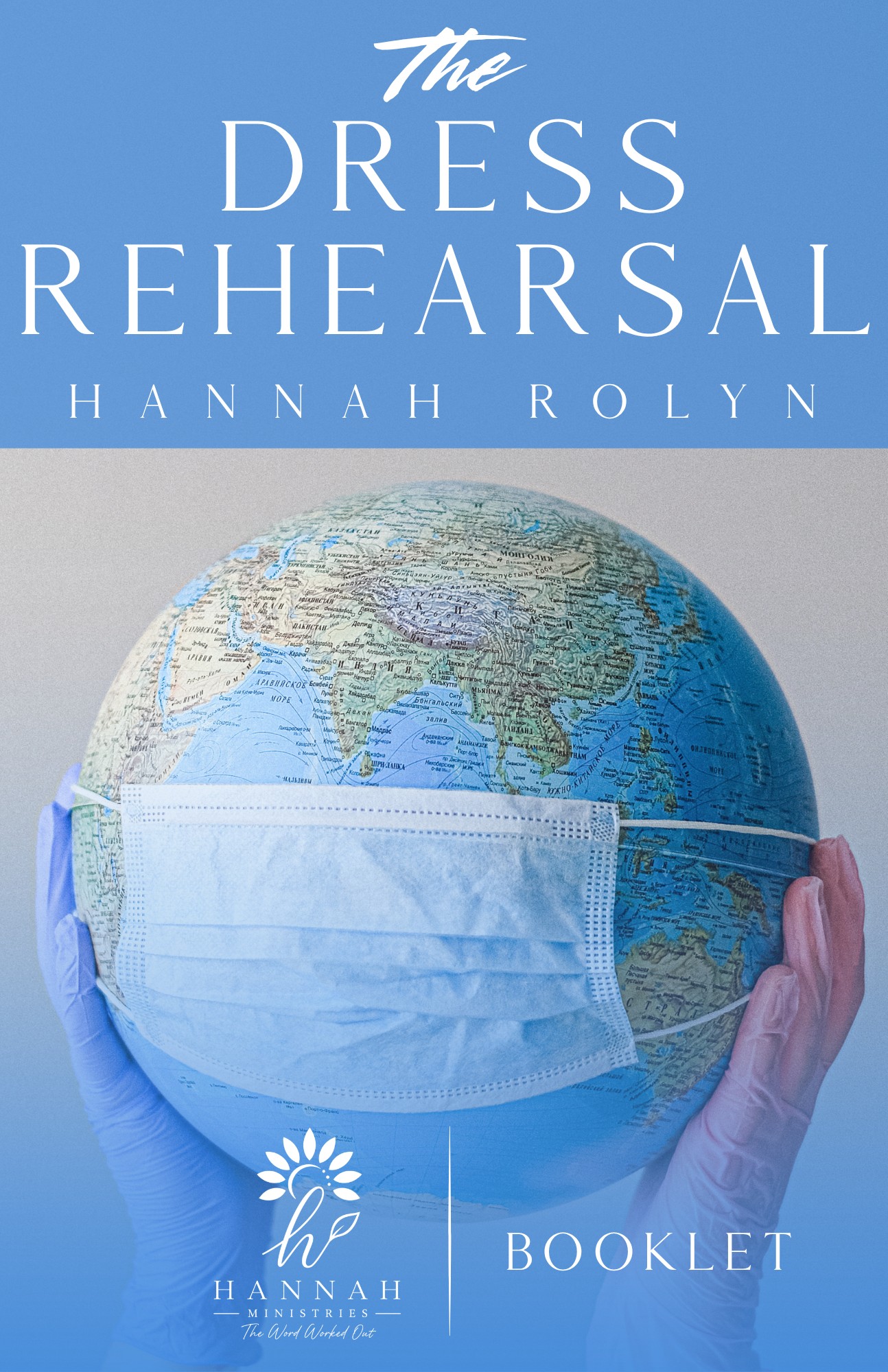
I want to take you back, My Friend, to a strange season that we all lived through together and that almost none of us have truly stopped to think about. I am speaking of the days when the whole world, more or less at once, was told to stay home, when shops closed, when churches went dark, when a man could be told where he might go and when he might leave and whether he might gather with other souls at all. We called it by the name of a virus. But this little booklet is not about the virus, and it is not about the science, and it is not about who was right or wrong concerning masks or medicines. You may hold whatever view you like on all of that; it is not my subject, and I will not argue it.
My subject is something else entirely, something I believe transcended the sickness altogether, and that we, as the people of God, ought to look at with sober and open eyes. For what happened in those days was not merely a public-health measure. It was a thing the world had never quite seen before, done with a speed and an ease that should give any thinking Christian pause. And I believe there are lessons in it, not frightening ones, but sobering ones, that the church has very largely failed to learn.
So I will not be handing you fear in these pages, and I will not be handing you conspiracy, and I will most certainly not be handing you a date or a prediction, for I have none to give and no business giving one. What I hope to hand you instead is a way of seeing: the sober, clear-eyed, unafraid way that belongs to people who happen to already know how the whole story ends. Come and look with me, calmly, at the day the world stayed home, and at what it quietly revealed.
chapter one
it was never about the virus
Let me clear the ground first, because if we do not, the whole conversation will get tangled in the wrong thing within a paragraph. This booklet is not about the virus. I do not care, for the purposes of these pages, how dangerous it was or was not, whether the masks worked, whether the medicines helped, whether the men in charge of the science got it right or got it wrong. Honest people have argued all of that to exhaustion, and it is not my concern here. That is not where the lesson is.
The thing that actually happened in those days was something underneath the sickness, something the sickness merely provided the occasion for. What actually happened is that governments told entire populations where they could go, when they could leave their homes, whether they could open their businesses, whether they could gather, and, most striking of all to a believer, whether they could assemble to worship God. And the populations, by and large, simply complied. That is the event. Not the virus. The virus was the doorway; what walked through it was a thing far larger and far more worth our attention.
The virus was the doorway. What walked through it was a thing far larger, and far more worth our attention.
I say this so that you will not waste your reading of this booklet fighting the last war over droplets and distances. Set all of that down. It is genuinely not the point, and a Christian who can only ever argue about the science has missed the thing entirely. The point is what the episode was, underneath: what it demonstrated about how a whole world can be moved, and how quickly, and how willingly; what it showed about the powers that move in this present age; and what it ought to teach the people of God who were watching, if only they had eyes to see it as more than a medical inconvenience.
For the rest of these pages, then, when I speak of those days, understand that I am never really speaking of the illness. I am speaking of the far stranger thing that happened around it and because of it, the day the world was told to stop, and stopped. That is the thing worth a Christian’s sober attention, and that is the thing we are going to look at together.
what the world had never seen
is waiting for you
Every booklet is free. Sign in with your email and we send you a code.
Signing in needs JavaScript, which is switched off in this browser.
Signed in
sources & notes
- The global scale and simultaneity of the 2020 restrictions were without precedent. By early April 2020, press tallies estimated that more than half the world’s population, on the order of 3.9 billion people, were under some form of lockdown or stay-at-home order. At the mid-April peak, UNESCO reported school closures in more than 190 countries affecting some 1.57 billion learners, over ninety per cent of the world’s students (UNESCO, 2020). No prior event suspended ordinary life at this scale simultaneously.
- 2 Corinthians 4:4 (“the god of this world”); 1 John 5:19 (“the whole world lieth in wickedness”); John 10:10 (“The thief cometh… to steal, and to kill, and to destroy”); Ephesians 2:2; John 12:31. W. E. Vine, Expository Dictionary of NT Words, s.v. “World,” “Devil, Satan.”
- U. Panchal et al., “The impact of COVID-19 lockdown on child and adolescent mental health: systematic review,” Eur. Child & Adolescent Psychiatry (2021): 61 studies, 54,999 children; anxiety and depression common, irritability and anger frequent. H. Ludwig-Walz et al., Child & Adolescent Psychiatry & Mental Health (2022, depression; 2023, anxiety), confirming a rise tied to school closures.
- That the harms to the young, the isolated, and the poor were foreseeable and warned of in real time is a matter of public record; see, e.g., the Great Barrington Declaration (Oct. 2020), signed by tens of thousands of clinicians and public-health scientists, warning of the damage of prolonged lockdowns, and dismissed at the time.
- The fast fear-pathway outruns deliberate reason: Joseph LeDoux, The Emotional Brain (1996); Daniel Kahneman, Thinking, Fast and Slow (2011), on “System 1” vs. “System 2.”
- George Orwell, Nineteen Eighty-Four (1949). On the engineering of mass consent: Gustave Le Bon, The Crowd (1895); the U.S. Committee on Public Information under Creel (1917), which fielded some 75,000 “Four-Minute Men” and produced tens of thousands of posters; Edward Bernays, Propaganda (1928); Joost Meerloo, The Rape of the Mind (1956).
- Isaiah 53:6; Psalm 100:3; John 10:4–5, the Scripture’s picture of men as sheep who are led and follow a voice.
- Exodus 23:2, “Thou shalt not follow a multitude to do evil.” On mass obedience and conformity: Stanley Milgram (Yale, 1961–1963), 65% of subjects delivered the maximum 450-volt shock on an authority’s word, falling to about 10% when others resisted first (Obedience to Authority, 1974); Solomon Asch (1950s), roughly a third conformed to a plainly false group answer against the evidence of their own eyes.
- Historical instances of near-unanimous consensus proved catastrophically wrong: the geocentric consensus overturned by Copernicus and Galileo (the latter condemned in 1633); the eugenics movement, respectable scientific and legal opinion in the early twentieth century, under which compulsory-sterilization laws were upheld in the United States (Buck v. Bell, 1927) and some sixty thousand Americans were sterilized, before the doctrine’s full outworking in Nazi Germany discredited it; and the crowd before Pilate that called to release Barabbas and crucify Christ (Matthew 27:20–26). Size and confidence are no evidence of truth.
- Historical precedents of populations surrendering liberty under fear and authority: the world wars’ blackouts, curfews, rationing, and surveillance; the internment of Japanese-Americans under Executive Order 9066 (1942); the Terror of the French Revolution (1793–1794); the Stalinist show-trials and purges (1936–1938). Same mechanism, differing scale: an authority, a fear, a compliant multitude.
- Revelation 13:16–17 (“that no man might buy or sell, save he that had the mark”), read in the historic futurist, premillennial sense, held with the Lord’s refusal of date-setting, Matthew 24:36; Acts 1:7. Only a family resemblance is drawn, not an identification. Cf. J. Vernon McGee, Thru the Bible (Revelation).
- John 17:14–18, believers “in the world” but “not of the world.” On lawful use of the age’s good gifts, 1 Corinthians 10:23, 31; 1 Timothy 4:4.
- 2 Thessalonians 3:10–12, Paul’s correction of those who quit their labor to await the Lord: “if any would not work, neither should he eat… work, and eat their own bread.” With 1 Thessalonians 5:6, “let us watch and be sober.”